Generation 0
Hans Jakob Brüchsel, brickmaker and Barbara Studer marry in 1630 in Swiss Zurich. They are listed in the 1634 household register of the city Frauenfeld (40 km away) with their children Hans Melchior (2 years) and Susanna (1 year).
Generation 1
After the end of the Thirty Years’ War (Peace of Westphalia 1648), Melchior moves to the imperial city of Esslingen, becomes a master mason and engraver in 1654, and marries Anna-Maria Enoch in 1655, registering the name Brüxel.
Generation 2
Melchior and Anna Maria´s children Maria Magdalena and Johannes are born in 1657 and 1659 in Esslingen. The respective church archives document for the first time the use of the family name Brixel.
Frauenfeld – Generations 0 and 1
Frauenfeld was and is the capital of the Swiss canton of Thurgau, directly south of Lake Constance. Today it has over 25,000 inhabitants. In 1630 there may have been under 2,000, most of them Protestant. Church services were still held alternately in the same church, and the mayor alternated every year between the religions. The so-called Old Confederacy, which was still loosely integrated within the Holy Roman Empire of the German Nation at the beginning of the Thirty Years’ War, became not only de facto but also legally independent with the Peace of Westphalia in 1648. It had kept out of the war, but there were internal religious tensions. After a peasant war in 1653 there was also a religious war in 1656 between Reformed and Catholic cities.
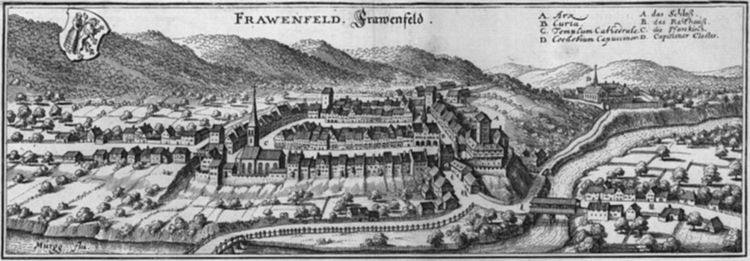
The marriage of Hans Jakob Brüchsel and Barbara Studer is documented on 8.2.1630, and in 1634 the family is listed in the town’s household register with the children Hans Melchior (2 years) and Susanna (1 year). Hans Jakob Brüchsel is listed as a brickmaker.
Brickmakers usually produce bricks from clay, sand and other earth components using molds. By its very nature, it is a localized profession, since it usually requires a kiln. Interesting in the later context of the profession of weaver is the itinerant brickmaker. This term refers to structures of seasonal migrant work that can be traced back to the beginning of the 17th century. Wikipedia cites the Lippe itinerant brickmaking industry as a particularly well-known example of early modern labour migration: “Due to the poor earning opportunities in hand spinning and hand weaving and triggered by the increasing mechanization of this work, young men from the agrarian Lippe region migrated seasonally to brickworks in Friesland. They worked there during the summer and returned home for the winter. In winter, they often worked again as linen weavers.”
Esslingen – Generations 1 and 2
The imperial city of Esslingen suffered heavily during the Thirty Years’ War. Its population grew from 6,000 to 18,000 at times due to refugees, but was reduced to around 4,000 due to famine and epidemics (the plague in 1635).
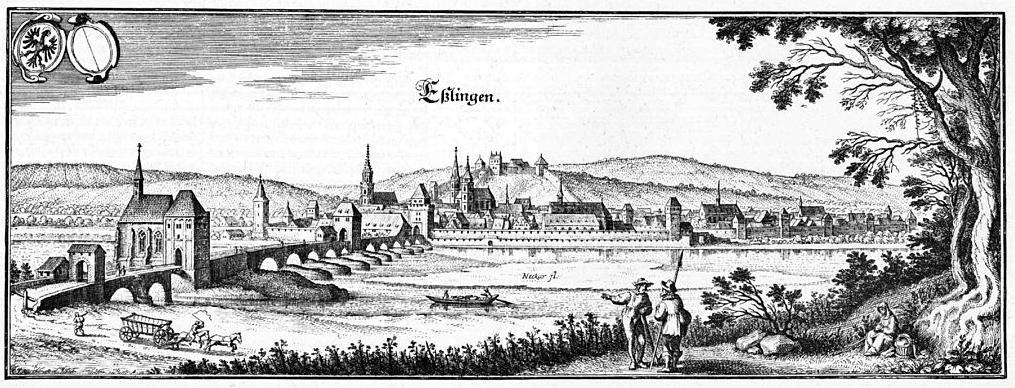
Melchior came to this town, probably as an apprentice on his travels. Archives of the city of Esslingen show a report on the presentation of his masterpiece 19.3.1654, under the name Melchior Preßell. In an ethical examination report to the council dated 29.8.1662, Melchior signs his name as Brüxel. This name can already be found in the church archives of his marriage to Anna Maria Enoch on 25.11.1655.
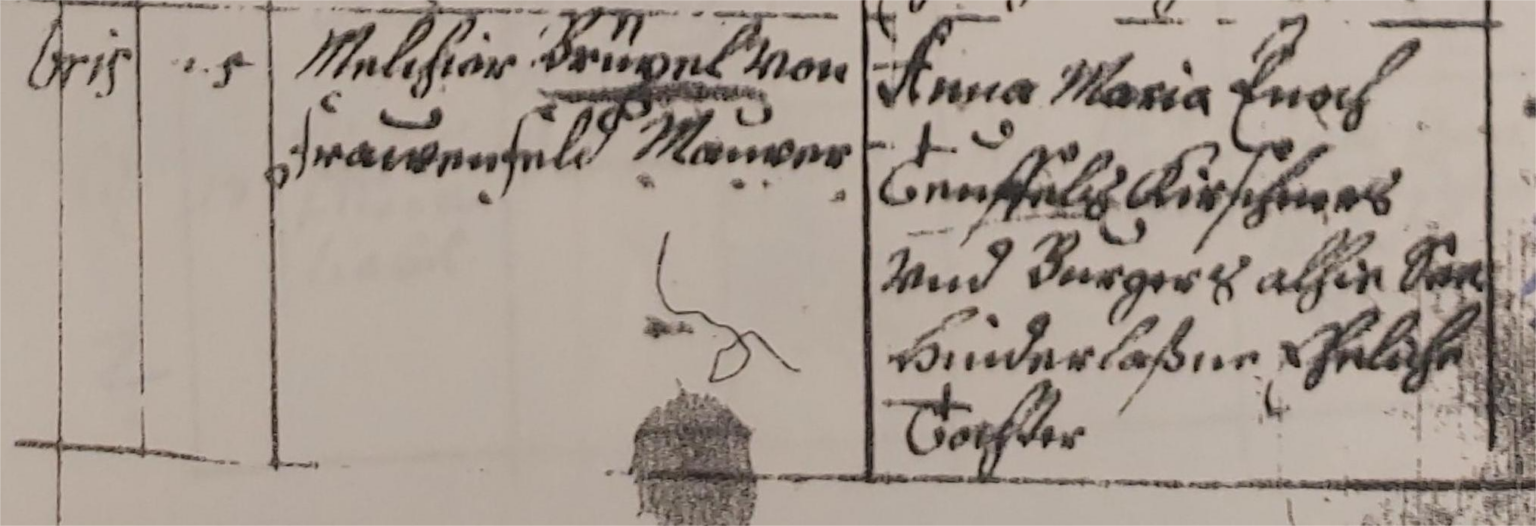
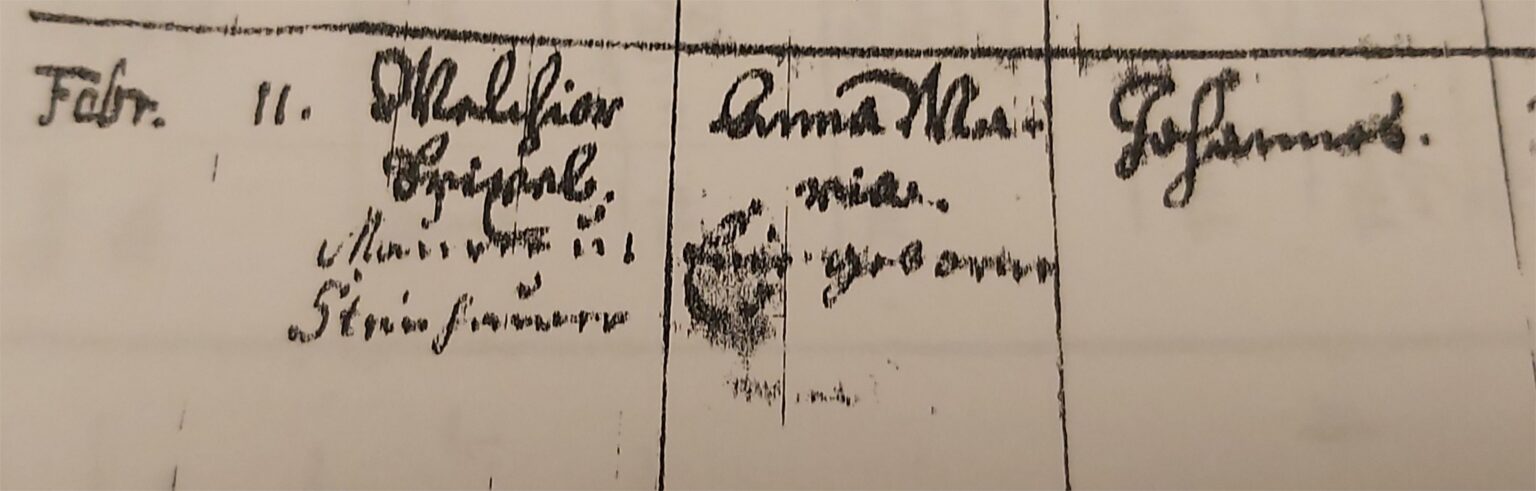
The surname changes to Brixel with the registration of the births of their children: on 7.8.1657 of Maria Magdalena, and on 11.2.1659 of Johannes. Those spelling changes were quite common in the Middle Ages. There is no doubt that Melchior Brixel is the same person who was born in Frauenfeld in 1632 as Melchior Brüchsel.
In some cities, the founding of guilds was associated with a so-called “guild revolution” or a political upheaval. The guilded citizens were often granted extensive autonomy from the outset, in order to make the founding of new towns attractive for traders and craftsmen. According to Wikipedia, in certain cities in the Holy Roman Empire, craftsmen organized in guilds even managed to seize political power in whole or in part. In the imperial cities, guild constitutions were at times quite powerful, which guaranteed the guilds dominance in the council. One became a guild member as a master craftsman by presenting a masterpiece, passing an oral examination and paying a fee. Members often had civil rights, which journeymen were not yet entitled to. Guilds did not only represent the members interests to the outside world, but also provided mutual support. They were often highly regulated for their own protection, including the requirement that you were only allowed to marry when being a master and guild member, and then preferably to daughters (or sons in the case of a female master) of other masters and guild members.